Alphabet Color Code Game: A Fun Way to Boost Letter Recognition
What Is the Alphabet Color Code Game?
The Alphabet Color Code Game is an interactive learning tool designed to help kindergarten students recognize and differentiate between uppercase and lowercase letters. It uses a simple yet effective color-coding system and physical linking cubes to engage young learners in hands-on literacy activities.
This game is part of a comprehensive educational resource that includes 40 print-ready activity mats. Each mat is designed to reinforce letter recognition through matching exercises that are both fun and educational. The game is especially effective for visual and kinesthetic learners who benefit from tactile interaction and color-based cues.
Key Features of the Alphabet Color Code Game
- Color-coded system: Uses red, orange, yellow, green, and blue plastic linking cubes to match letters based on assigned color codes.
- Variety of mats: Includes uppercase match, lowercase match, uppercase-to-uppercase, and lowercase-to-lowercase match mats for varied practice.
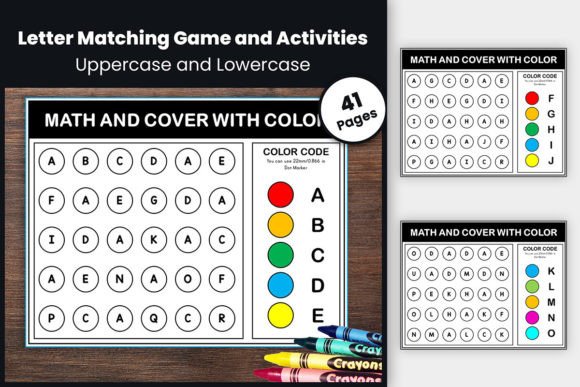
- Print-ready format: Comes in both PDF and JPG formats with 41 pages sized at 8.5 x 11 inches for easy printing and classroom use.
- Durable setup: Designed to be printed and placed in page protectors for repeated use without wear.
- Flexible implementation: Can be used for independent practice, literacy centers, or small group instruction.
Why Letter Recognition Matters
Letter recognition is one of the foundational skills for early literacy development. It allows children to identify and distinguish letters, which is essential for learning to read and write. The Alphabet Color Code Game makes this process engaging by turning abstract symbols into interactive puzzles.
By matching colored cubes to corresponding letters, children develop visual discrimination skills, strengthen fine motor control, and begin to internalize letter shapes and sounds. These early skills form the basis for phonics, spelling, and reading fluency later on.
How the Game Works
Each activity mat presents a series of letters paired with a color code. Students use plastic linking cubes in specific colors to cover the matching letters on the mat. This tactile experience reinforces letter identification while making learning feel like play.
For example, a mat might show the uppercase letter “B” marked in blue. The student finds the lowercase “b” also marked in blue and places a blue cube over it. This process helps children connect uppercase and lowercase forms and understand letter consistency across different contexts.
Who Can Benefit from the Alphabet Color Code Game?
This game is ideal for:
- Kindergarten teachers looking for hands-on literacy tools.
- Parents and homeschool educators seeking structured yet playful learning activities.
- Special education professionals supporting children with developmental or learning differences.
- Daycare providers offering engaging educational experiences.
Because it’s easy to set up and reuse, the Alphabet Color Code Game is perfect for both classroom and home environments. Its flexible design supports individual learning, small group collaboration, and guided instruction.
Practical Applications in the Classroom
Here are a few real-world ways educators can use the Alphabet Color Code Game:
- Literacy Centers: Set up a rotation station where students work independently or in pairs to complete mats.
- Early Finisher Activity: Offer mats as a quiet, constructive option for students who complete their work early.
- Intervention Tool: Use with students who need extra support in letter identification and visual discrimination.
- Parent Engagement: Send home printed mats and suggest using household items like buttons or beads if linking cubes aren’t available.
Strengths of the Alphabet Color Code Game
- Engaging and tactile: Keeps students actively involved through hands-on interaction.
- Visually stimulating: Color coding makes abstract letter forms more memorable.
- Reusable and adaptable: Print once, use many times with page protectors and dry-erase markers.
- Supports multiple learning styles: Appeals to visual, kinesthetic, and logical learners alike.
Considerations and Limitations
While the Alphabet Color Code Game is a valuable educational resource, it's important to consider a few practical factors:
- Material requirements: Requires access to plastic linking cubes or similar manipulatives. If unavailable, educators may need to improvise with other small objects.
- Storage and organization: With 40 mats, proper labeling and sorting are necessary to keep activities accessible and efficient.
- Age appropriateness: Best suited for kindergarten or early preschool learners. Older students may find the activities too basic unless used for review or reinforcement.
What to Expect When Using the Game
When first introduced, students may need guidance on how to use the color codes and match letters correctly. However, most children catch on quickly and begin working independently after a few sessions.
Over time, consistent use of the Alphabet Color Code Game can lead to noticeable improvements in letter recognition, speed of identification, and confidence in early reading tasks. Teachers may also observe better focus and participation during literacy blocks.
How to Evaluate Suitability for Your Needs
Before incorporating the Alphabet Color Code Game into your teaching or parenting routine, consider the following questions:
- Do your learners need more interactive practice with letter identification?
- Do you have access to manipulatives like linking cubes or can you substitute them?
- Are you looking for a reusable, low-prep activity that supports multiple learning goals?
- Do you want to make literacy practice more engaging and visually stimulating?
If the answer to most of these is “yes,” then the Alphabet Color Code Game is likely a good fit for your educational setting.
Final Thoughts
The Alphabet Color Code Game and Recognition system offers a creative and effective way to build foundational literacy skills. With its 40 activity mats, color-coded design, and flexible use options, it supports both educators and learners in a meaningful, engaging way.
Whether you're a teacher preparing literacy centers, a parent homeschooling your child, or a professional working with early learners, this resource can become a valuable part of your instructional toolkit. By transforming letter recognition into a playful, hands-on experience, the Alphabet Color Code Game helps children build confidence and competence in reading from the very beginning.